

In 2025, the global footwear industry is changing very fast. Buyers, brands, and factories are all facing these big shifts. From eco materials to online sales, new trends are shaping what people wear and how companies make and sell shoes.
Current Status Of The Global Footwear Market
The global footwear market is growing really fast, with strong demand across all regions.
Market Size and Growth Outlook
- Reports say the global footwear market was worth $409.5 billion in 2022. It may hit $725.1 billion by 2032, growing 5.9% yearly. Some other insights believe it will even get to $789.52 billion by 2032.
- These footwear growth rates vary by type and region. Sports and kids’ shoes currently lead in growth with the rise of youth populations.
Market Share Breakdown by Product Type
- Sports shoes are no longer limited to training and the gym, as people now wear them for their day-to-day activities. Due to this, brands add more style and comfort to bring in more buyers.
Fashion shoes remain very strong in cities, especially among women. These include flats, heels, and other kinds of casual dress styles. Most people who buy fashion shoes want a mix of both style and comfort
- Certain kinds of niche shoes are very useful in the health and job sectors. Safety shoes are required in many industries, such as oil and construction. Their designs now have a blend of comfort and durable support for workers.
Arch support and a stable foot are the main benefits of orthopedic shoes in healthcare. Older adults, those with foot pain, and people who are constantly on their feet all day prefer this type of shoe.
Diabetic footwear also helps those with blood sugar issues. They are built to avoid blisters, reduce pressure, and protect sensitive skin. As health awareness grows, demand for this kind of shoe is on the rise.
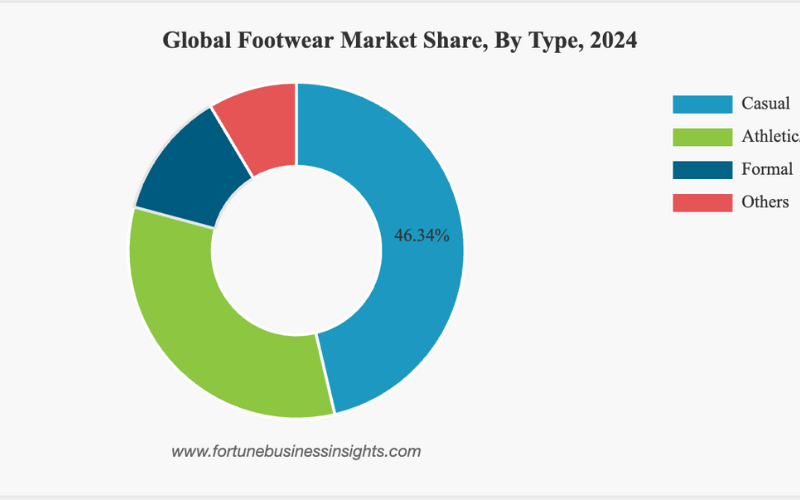
The figure below shows the market share by type in the past year:
Leading Consumer Markets
In each region, the buying patterns all differ. While the developing markets are searching for value and comfort, the developed ones seek brand identity and performance.
- North America: They currently hold the second largest share of the market. This is thanks to the number of tech-savvy consumers who are looking for innovative features like built-in GPS and smartphone connectivity.
Leading brands such as Skechers, New Balance, and Crocs prioritize making quality footwear to satisfy the needs of their customers.
- Europe: Europe’s market is said to grow at a high rate in the years to come. This is thanks to the growing awareness of sustainable fashion, which increases the use of eco-friendly footwear.
Fashion is growing fast in Germany, Italy, and France, which in turn, boosts demand for stylish shoes. This provides considerable growth opportunities to brands operating within the region.
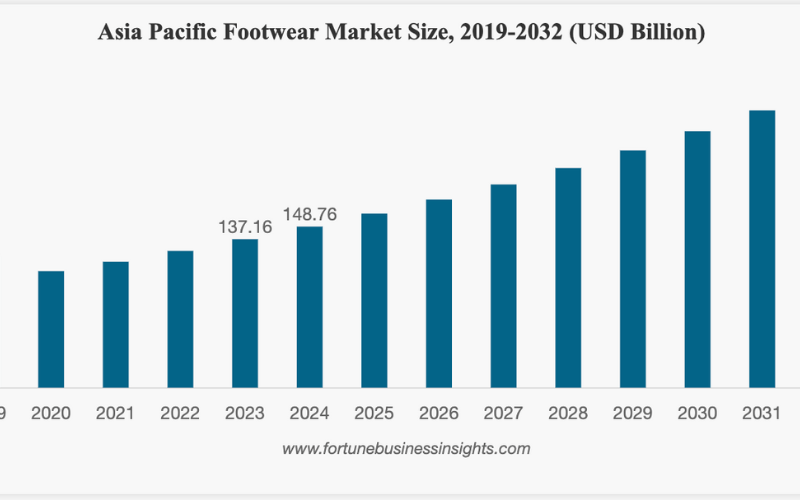
- Asia Pacific: This region led the global market in 2024 and is expected to keep its dominance in the years to come. India and China are the top footwear producers globally, thanks to the high, growing population and disposable income.
With consumers focusing on better, healthier lifestyles, the demand for athletic shoes is said to increase in countries like South Korea, Australia, and Japan in the near future.
The figure below shows Asia Pacific’s market size in the past and the prediction for the coming years:
Category Trend Analysis
Footwear trends in 2025 go beyond just looks. Most buyers now want something that feels good, lasts long, and matches their values. In this section, we will cover the popular types, design changes, and what buyers want based on age and gender.
High-Growth Subcategories
- Athleisure and Sports-Casual Crossover: Athleisure continues to dominate the market because most of them feature breathable materials and supportive midsoles.
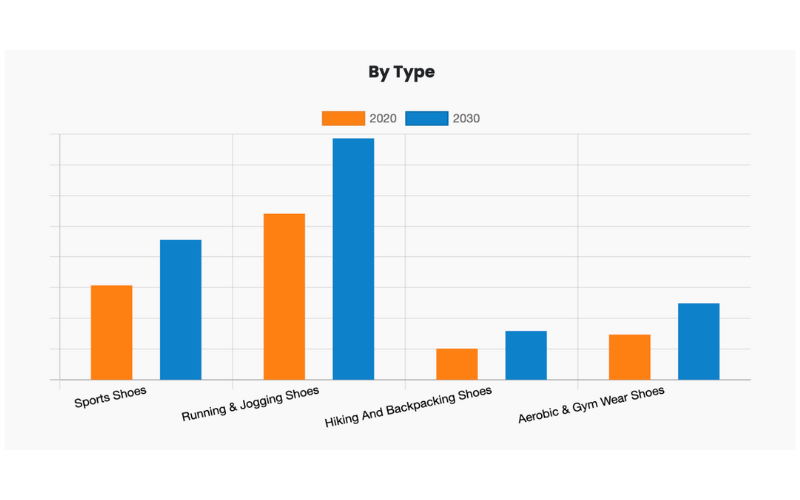
The global athletic footwear market is expected to reach $165 billion by 2030. From the figure below, running shoes are expected to continue dominating the athletic footwear market for the foreseeable future:
- Sustainable and Recycled-Material Shoes: Big brands now make shoes with materials like recycled plastics and natural cotton. This helps reduce waste and meets the demand for growing cleaner products.
More companies are also promoting closed-loop production, where old shoes are taken in to make new ones. The materials used are cost-effective and fit into the systems of current factories, making it easier to produce shoes on a large scale.
- Minimalist, barefoot, and modular designs: These shoes are simple, light, thin, and built for the natural environment. Barefoot shoes have very thin padding, which helps to train the feet muscles by moving more freely.
On the other hand, Modular shoes have designs that let you swap out the soles or straps. This means that one shoe can fit multiple styles, and you can replace the parts without throwing away the whole shoe.
Although it’s not so popular, these kinds of shoes are growing in demand as people are looking for something more natural and less bulky.
Gender & Age Group Distribution
- Men’s vs. women’s vs. children’s footwear trends: Men usually go for simple colors and practical designs. Their top picks usually revolve around boots, slip-ons, and sneakers.
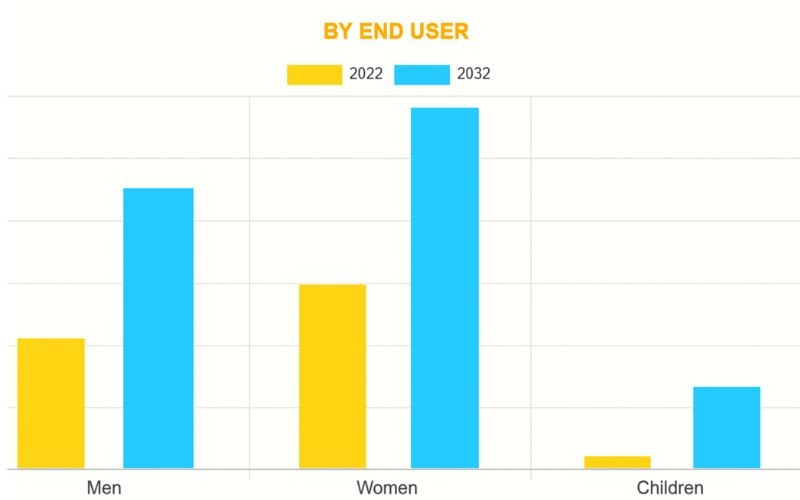
In 2022, women dominated the footwear market, taking up about half of the market share. With more working women these days, there’s a demand for shoes that work for both casual outings and work.
Children’s shoes are also growing very fast, and it is expected to grow at a rate of 6.6% from 2023 to 2032. Parents look for soft materials, fun designs, and features like Velcro for easy wear. That’s why this segment is getting more attention from brands.
The image below shows how each segment is expected to grow by 2032:
- Category-specific growth dynamics by region: In Asia, casual styles are seeing a strong demand in urban areas across all age groups. In Europe, both men and women prefer unisex styles that both genders can easily wear.
In North America, both young teens and older adults prefer shoes with padded soles. However, teenagers switch styles often to follow trends they usually see on social media.
Emerging Design and Material Trends
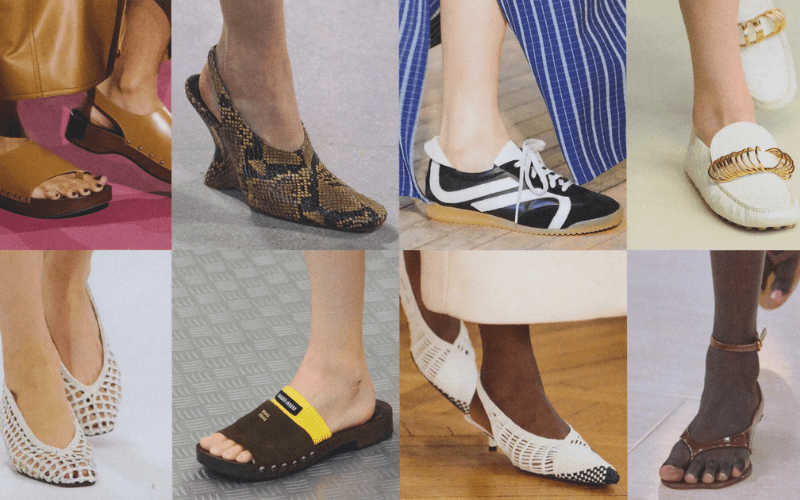
- Biodegradable materials and plant-based alternatives: Companies are moving towards making biodegradable footwear which are more ozone-friendly and reduces harm to the environment. To prove that they’re safe, brands use labels like GOTS to make buyers feel more confident with their choices.
- 3D printing and digital customization: 3D printing lets companies scan your feet to make shoes that fit you perfectly. This reduces the issue of returns since there are barely any problems with size.
Companies will also let you customize it the way you want by picking out sole type, color, or even the materials to be used.
- Gender-neutral and adaptive footwear design: Unisex shoes use a very simple design and can be worn by anyone. This makes shopping for shoes fairly easy for everyone too.
Adaptive shoes tend to help seniors, kids, or those with health conditions. You could have designs where the shoes have no laces, or they use simple straps that need only one hand.
Global Supply Chain Pattern
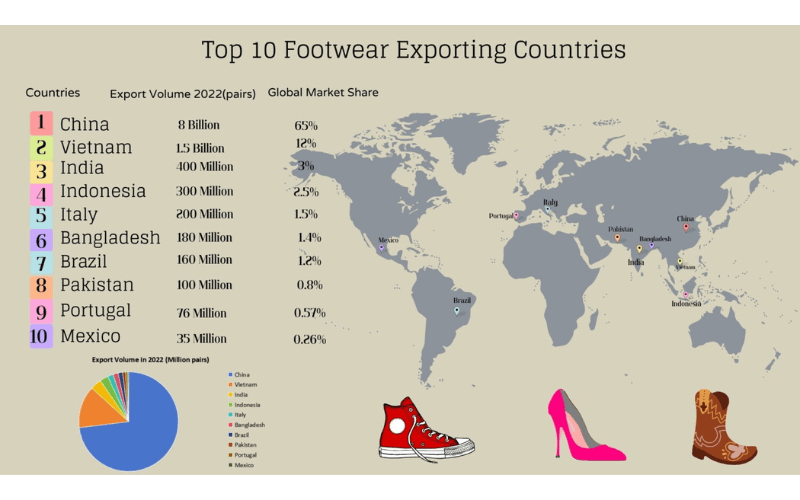
As more people buy shoes worldwide, companies have to make and ship them faster and cheaper. To keep up, brands must choose the best places to produce, and this is based on cost, quality, and possible risks.
Leading Production Hubs
- China, Vietnam, India, and Indonesia currently dominate the global footwear market. These four countries offer a good mix of large-scale production, low-cost labor, and skilled workers. China is still leading in the overall market volume, but Vietnam is gaining market share fast, especially for athletic and fashion shoes.
India and Indonesia are also expanding their exports by investing in better equipment and training. Brands rely on these hubs for both speed and cost-efficiency.
- Due to rising wages and stricter labor laws, some countries have made brands reconsider where they manufacture their shoes. Most of them are moving some production from China to Southeast Asia or even Latin America to reduce costs and avoid political risks.
Trade rules, shipping delays, and health policies after COVID-19 have also forced companies to diversify their supply chain. Some brands now use regional factories to shorten delivery times and avoid overdependence on one location.
Tariffs, Trade Policies & Cost Pressures
- Trade tensions, especially between the U.S. and China, have led to tariffs on some footwear categories. These added costs have made it harder for brands to price shoes competitively. As a result, many companies are sourcing materials or finished products from other countries with better trade deals.
- Free trade agreements like the Regional Comprehensive Economic Partnership (RCEP) are also shaping where brands invest and source products.
OEM/ODM vs. Brand-Owned Production
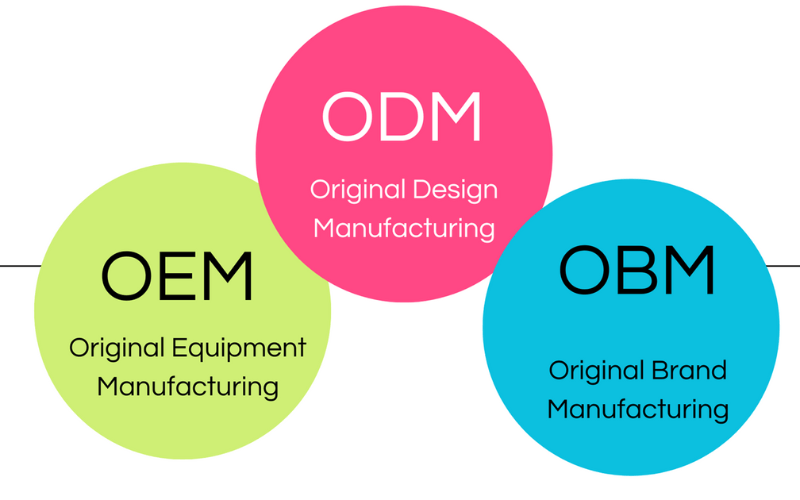
- OEM (Original Equipment Manufacturer) and ODM (Original Design Manufacturer) setups allow brands to outsource production and, sometimes, product design. With OEM, you give the factory the design, and they build it.
But with ODM, the company builds and designs the product, while the brand sells it as its own.
- Brand-owned factories cost more to build and operate, but they give full control over every part of production, from materials to worker conditions. This setup helps protect intellectual property (IP) and brand secrets.
It also ensures quality stays consistent across all products. Larger brands use this model to manage risk, improve long-term stability, and set higher standards that outsourced factories may not be able to meet.
Changes In E-Commerce And Distribution Channels
The way people buy shoes is changing fast. Online stores, mobile apps, and social media are now key sales tools. Brands must now adjust how they sell, ship, and stay connected to their buyers.
Digital Channels and Platform Preferences
- Online marketplaces such as Amazon are also being widely used to sell footwear products. Brands use them to protect their image and avoid deep discounting.
People now make use of different apps like Instagram and TikTok to find products and buy them directly.
- Traditional retail buying is dying fast. Nowadays, consumers prefer to make their purchases online and have their items delivered directly to them.
Rise of Direct-to-Consumer (DTC) and Its B2B Impact
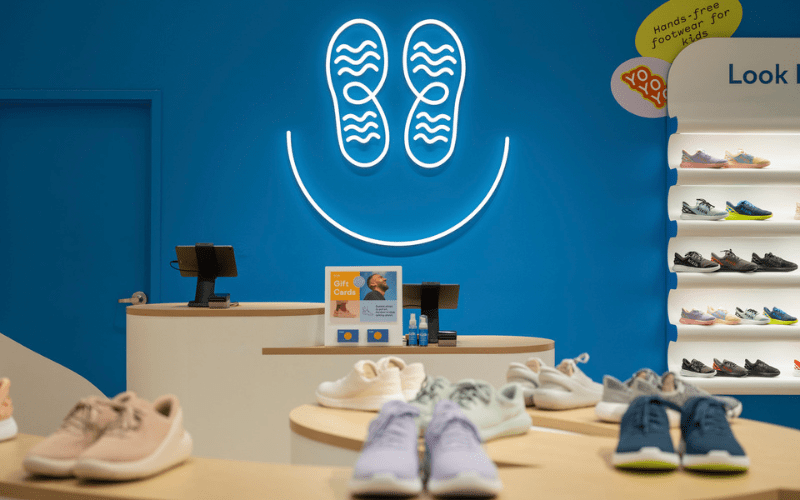
The DTC model helps brands grow faster, but it also changes how business-to-business (B2B) deals work.
- DTC models allow brands to sell directly to customers without using third parties. This speeds up response to trends and reduces time-to-market. It also brings higher profit margins. Retailers and distributors now expect suppliers to be just as flexible and fast.
- Many suppliers are shifting toward B2B2C, where they support retail clients who want to offer direct-to-customer services under their own name. Several brands now work with factories that handle bulk and single-unit drops. With this, they can save on storage and shipping.
Private Traffic and Customer Retention
- It’s also important not to depend on only ads for traffic. Use email lists, apps, and groups that will allow you to speak to buyers directly. This way, you spend less, have more control, and keep people closer to your brand. It also helps to get fast feedback, try new ideas, and fix any problems as they arise.
- With CRM tools, you can track what customers buy and also see what they buy often. With this, you can personalize messages to a customer, highlighting a new shoe they can buy, depending on what they purchased previously.
Future Opportunities And Challenges
There are a lot of opportunities for brands to take advantage of as the global footwear market grows, but there are also some risks they may face.
The Green Footprint: Sustainability Pressure

- Due to new rules, brands are now pushed to cut waste and carbon emissions. Buyers also need proof that the products were made clean. To tackle this, brands need to list what goes into each product and where it was made. If they remain open about this, buyers will be more willing to patronize them.
Navigating Supply Chain Risk
- Situations like COVID have shown how risky it may be to depend on one supplier or country. Due to this, brands mostly keep a lot of stock ready to plan for any issues that may arise.
In case of any delays or shutdowns that can stop production, it is necessary to diversify by using factories in many different areas. This way, if one factory runs into any problem, another can step in to help. Automated machines are also used to save time and lower costs, all to keep the supply of products moving.
How Small and Mid-Sized Brands Can Compete
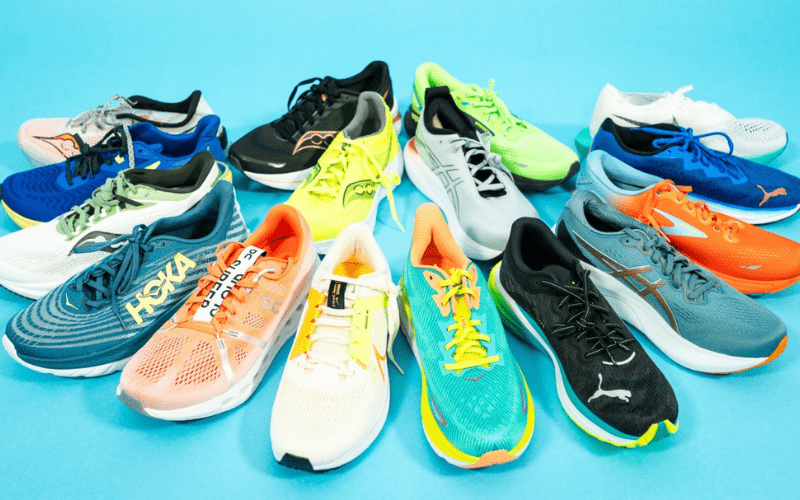
- With OEM and ODM partners, small brands or mid-sized brands can cut startup costs and make shoes fast, without owning a factory. With low minimum order quantities (MOQs), they can order fewer shoes and test styles without spending a lot.
- Small brands tend to move faster than bigger ones by launching shoes in shorter cycles. This helps them follow trends and react fast to stand out against their competition. Buyers also want something that feels fresh and rare, which helps boost sales for these small brands.
Heva Shoes Manufacturing Capabilities
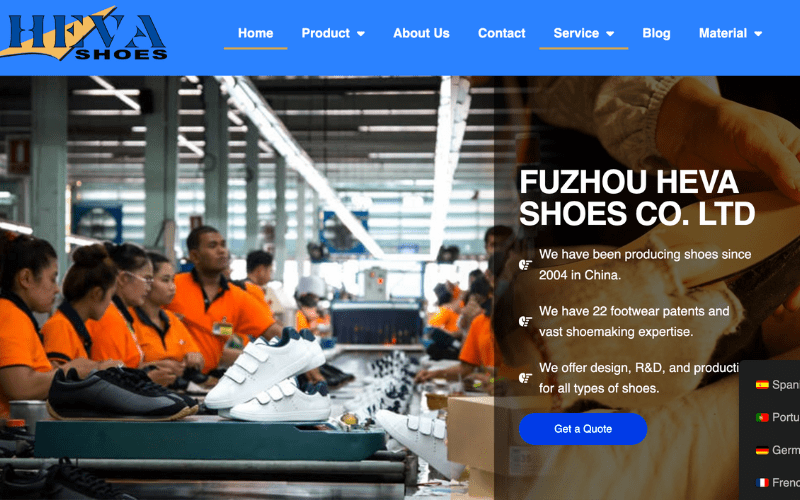
We help brands bring shoe ideas to life, from concept to shipment. We offer full support, modern tools, and expert design. Whether you’re starting small or scaling fast, Heva makes it simple to build quality footwear.
Why Heva Shoes?
- We bring over 20 years of experience as an OEM and ODM partner for international footwear brands. We handle both design and production, helping brands launch new products fast without building their own factory.
By leveraging our strong systems and expertise, you can save time and cost while tapping into deep manufacturing techniques.
- Our factory is in Fuzhou, China’s key footwear hub. We use smart tools like CNC stitching, automatic cutting, and full-line quality checks. These systems speed up production while keeping errors low.
Our team is trained to handle all types, like EVA sandals, running sneakers, barefoot shoes, and more. We mix modern machines with expert hands to make shoes that feel right and look good. We also hold over 22 shoe-related patents and test new materials like mesh, vegan leather, and recycled fabric.
Customization Support and Categories Served
- We also support sports, fashion, casual, and eco-friendly shoes. You can choose your soles, uppers, colors, and trims. Want to launch garden clogs or custom slides? We’ve got you covered.
Our process makes sure each design meets your brand style and quality. You can tweak the look before we go into bulk. We also handle add-ons like logos, tags, and packaging. With this, there are fewer steps and a better finished product.
- From first sketch to mass delivery, we’re with you all the way. We build samples based on your idea and update them till you’re satisfied. Once approved, we move into production fast and keep you informed through each step.
We handle everything in-house, from cutting, stitching, gluing, finishing, and packing. With our team on your side, you’ll get consistent results without delays or surprises. Our setup lets you grow without wasting stock or money.
Let’s Build Together
Want to get started? Get in touch with us. We’ll explain your options and help with any questions you have. You can also request a sample to test our work before moving forward. We’re ready when you are. Let’s make great shoes together.
 French
  English
  Spanish
  Portuguese
  German